
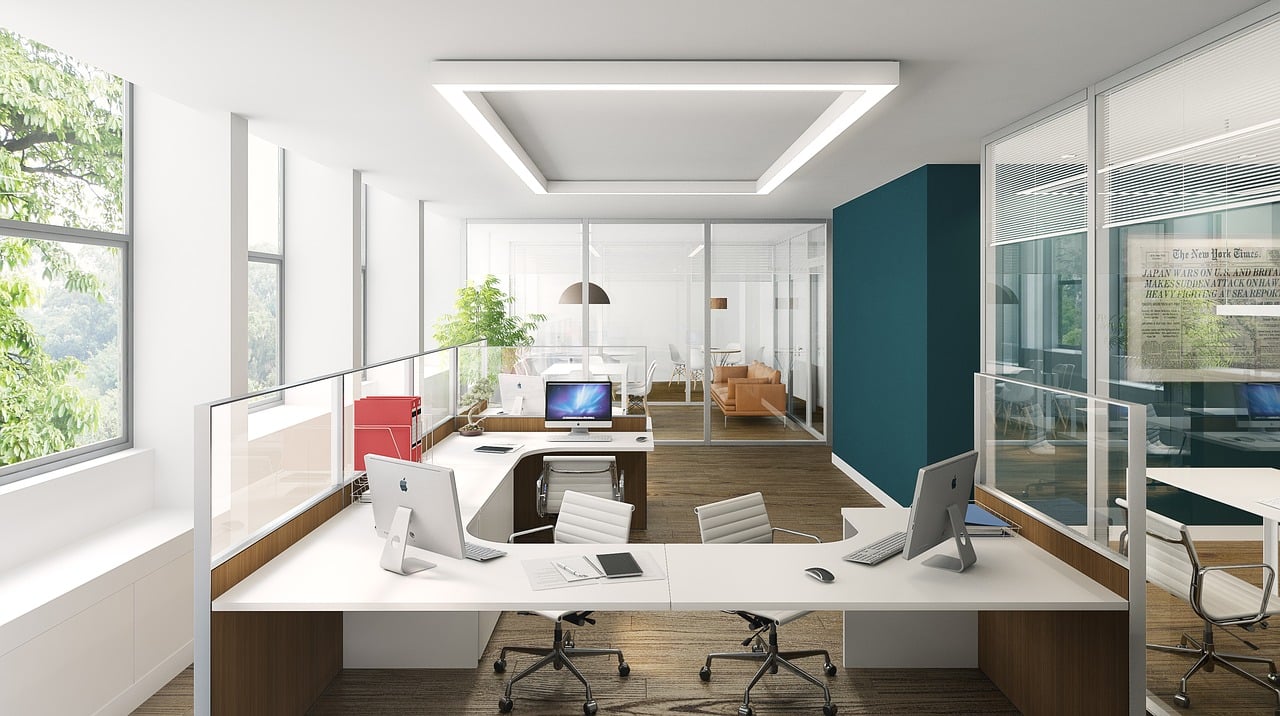
In the dynamic landscape of global business, the traditional office space is undergoing a profound transformation, driven by technological advancements, changing workforce demographics, and the ongoing impact of the COVID-19 pandemic. As business journalists focused on global finance and economic trends, it is crucial to dissect the innovative workspaces that are reshaping the way we work and, consequently, influencing investment strategies, corporate decisions, and economic policies.
The rise of hybrid work models
One of the defining trends in the realm of workspaces is the rise of hybrid work models. The pandemic has forced businesses to reconsider the traditional office-centric approach, giving rise to a more flexible and adaptable work environment. According to a recent survey by McKinsey & Company, 80% of global companies are planning to adopt a hybrid work model post-pandemic, enabling employees to balance remote work with in-office collaboration.
This shift has significant implications for real estate markets, with a potential reduction in demand for commercial office spaces in central business districts. The trend towards remote work has also spurred a surge in demand for suburban and rural office spaces, reflecting a desire for a more balanced lifestyle among the workforce.
Technology driving collaboration
The embrace of remote work has accelerated the adoption of advanced technologies facilitating collaboration and communication. Virtual reality (VR) and augmented reality (AR) tools are being integrated into workspaces, allowing teams to collaborate seamlessly across geographical boundaries. This not only enhances productivity but also reduces the need for physical office spaces.
Leading the charge in this technological revolution is a quote from Sundar Pichai, CEO of Alphabet Inc., who stated, “The future of work is flexibility.” Pichai’s words underscore the industry recognition that harnessing technology is essential for businesses to thrive in the evolving work landscape.
Flexible office spaces and co-working
The surge in remote work has given rise to an increased reliance on flexible office spaces and coworking arrangements. According to a report by Statista, the global flexible office space market is expected to reach $111.68 billion by 2024. This trend is particularly popular among startups and small businesses, allowing them to access professional spaces without the long-term commitment associated with traditional leases.
Major players in this arena, such as WeWork and Regus, have become integral components of the modern business ecosystem. The scalability and cost-effectiveness of these spaces offer a practical solution for companies seeking to adapt to uncertain economic conditions.
Sustainability and wellness in workspaces
Beyond the structural and technological aspects, the modern workforce places a premium on sustainability and wellness in their work environments. Forward-thinking companies are incorporating green building principles, energy-efficient designs, and wellness programs into their office spaces. According to a study by the World Green Building Council, employees working in certified green buildings experience higher levels of satisfaction and productivity.
As shared by Anne Wernand, a sustainability expert and founder of GreenWorkplace, “Sustainability is not just about the environment; it’s about creating a workspace that fosters employee well-being and reflects corporate responsibility.”
The impact on economic policies
The transformation of workspaces is not confined to the corporate realm; it has a ripple effect on economic policies. Governments are reevaluating policies related to urban planning, transportation, and taxation to accommodate the shift towards remote and flexible work. For instance, some cities are exploring ways to repurpose commercial spaces for residential use, creating more livable and sustainable urban environments.
In conclusion, the evolution of workspaces is a multifaceted phenomenon with far-reaching implications for global finance and economic trends. The rise of hybrid work models, driven by technology, the growth of flexible office spaces, and the emphasis on sustainability and wellness are reshaping the business landscape. As investors, policymakers, and business professionals, it is imperative to adapt to these changes and leverage the opportunities they present. In the words of Klaus Schwab, Founder and Executive Chairman of the World Economic Forum, “In the new world, it is not the big fish that eats the small fish, it’s the fast fish that eats the slow fish.” Embracing innovative workspaces is not just a trend but a strategic imperative for navigating the complexities of the modern business world.
