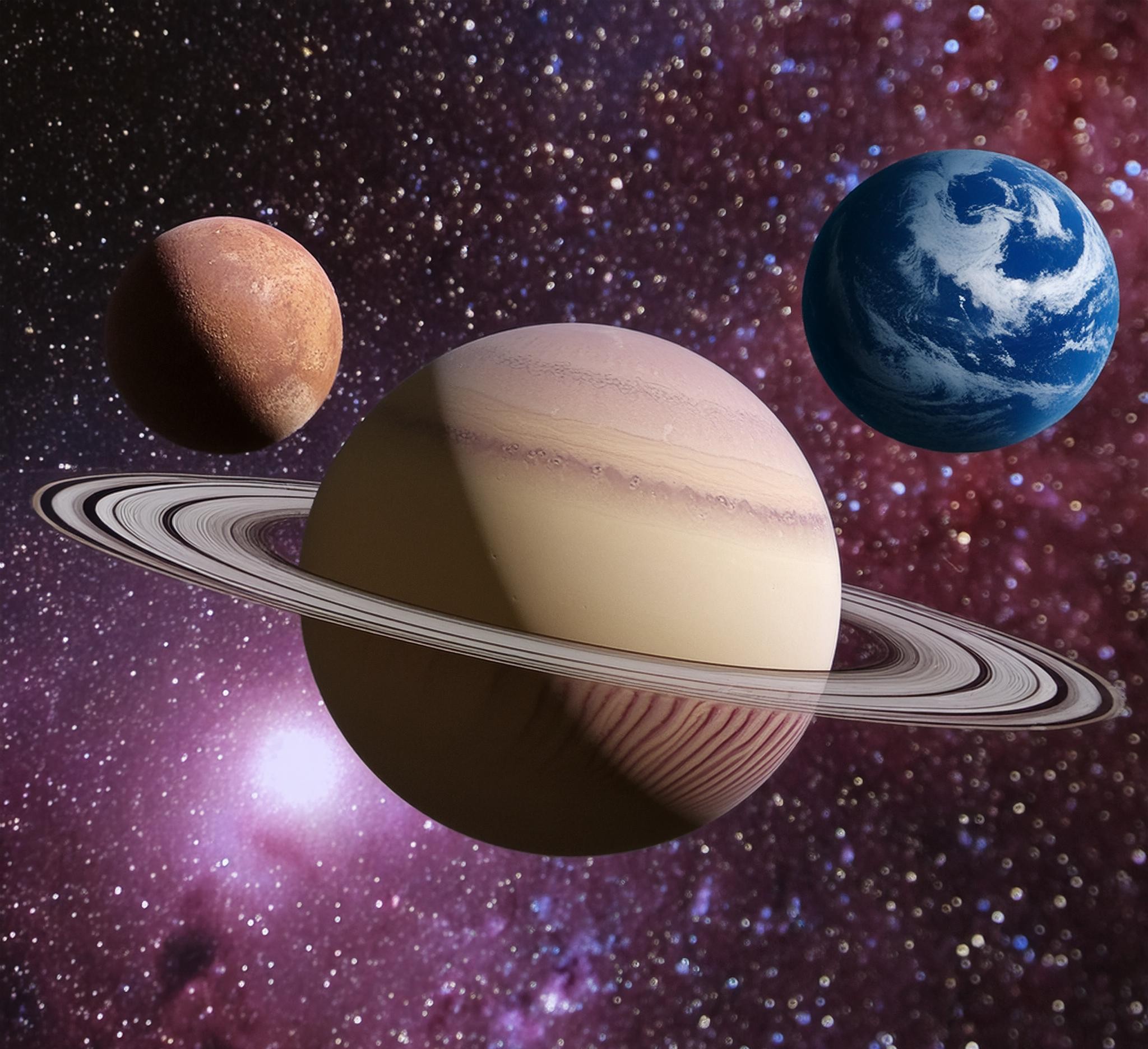
A celestial chaotic dance


Comhnall Compaoré MacTavish
🔬 Straight outta Inverness, Scotland, where my grand-father immigrated from Burkina Faso, I'm Comhnall @SciSavvyPro, your gateway to the wonders of science and the cosmos! 🚀 With a deep-rooted passion for unraveling the mysteries of the universe, I'm your go-to guide for all things science and physics. 🌌💡 Embark on a journey through the cosmos, from cutting-edge physics theories to mind-bending scientific discoveries. 🌐✨ 💬🔍 Your insights matter! Share your thoughts, ask me questions, and let's start a conversation that celebrates the marvels of science. 🌟📚 #ScienceSavvy #PhysicsExplorer #CosmicCuriosity #UnleashDiscovery #ScienceEnthusiast 🌠🔭🧪
10 Comments
The article effectively unpacks the mathematical complexity of the three-body problem. The initial explanation referencing Euler’s (1749) work on the lack of a general solution lays a strong foundation. Furthermore, mentioning the utility of numerical methods and N-body simulations (Sussman & Wisdom, 2011) demonstrates a grasp of current computational approaches in tackling this problem.
Whoa! This article totally blew my mind! It explains that crazy three-body stuff from the show in a way that even a space rookie like me can understand. Now I finally get why everything goes so haywire in those alien worlds!
The article strikes a commendable balance between scientific rigor and accessibility. The explanation of the three-body problem effectively utilizes foundational concepts from celestial mechanics without delving into overly complex mathematical formulations. This allows for a broader audience, including those with a general scientific background, to grasp the essence of the problem and its significance.
Forget warp drives and lightsabers, this article is the real sci-fi! It’s like a deep dive into the science behind those epic space battles in “The Three-Body Problem.” Now I can appreciate the show on a whole new level! And the video of Neil DeGrasse Tyson is awesome by the way!
The article offers a strong foundation for understanding the three-body problem. It clearly outlines the mathematical challenges inherent in the system and effectively summarizes the limitations of analytical solutions. The inclusion of N-body simulations as a crucial tool for studying these complex dynamics (Sussman & Wisdom, 2011) demonstrates a grasp of current computational approaches. However, one potential area for further exploration could be a more nuanced discussion of alternative analytical techniques beyond simply mentioning bifurcation theory and KAM theory. For instance, a brief mention of the effort surrounding Sundman transformations or Hill’s approximations, along with their limitations, could provide a more comprehensive picture of the ongoing pursuit of analytical solutions within specific problem classes. Overall, the article provides a valuable resource for researchers and students seeking a well-structured introduction to the complexities of the three-body problem.
The article provides a well-rounded exploration of the three-body problem. It delves into specific applications in planetary systems (Murray & Dermott, 1999) and binary star systems (Sana et al., 2014), showcasing the problem’s practical significance in celestial mechanics. Additionally, the mention of its broader implications in chaos theory and exoplanet studies (Spiegel & Liu, 2016, Laughlin et al., 2002) reflects a comprehensive understanding of the subject. Well done here Comhnall!
The article’s inclusion of the science fiction aspect through Cixin Liu’s work (Remembrance of Earth’s Past) demonstrates a thoughtful approach to bridging the gap between scientific inquiry and societal engagement. This interweaving not only adds a layer of intrigue but also subtly underscores the philosophical and existential questions surrounding the unknown complexities of celestial mechanics.
This post is like a decoder ring for the universe! It cracks the code on how multiple planets can dance a chaotic ballet, just like in the Trisolaran system. Super cool stuff for any sci-fi nerd who wants to understand the science behind the fiction!
The post goes beyond simply presenting the three-body problem as a historical conundrum. Highlighting ongoing research avenues, such as the exploration of semi-analytical solutions and the application to exoplanetary systems, demonstrates a nuanced understanding of the evolving nature of scientific inquiry. This perspective underscores the article’s relevance within the current scientific discourse surrounding celestial mechanics.
This is gold for fans of “The Three-Body Problem”! It explains the mind-bending physics behind the show without getting bogged down in technical jargon. Now I can impress my friends by dropping knowledge about N-body simulations and chaotic dynamics!