
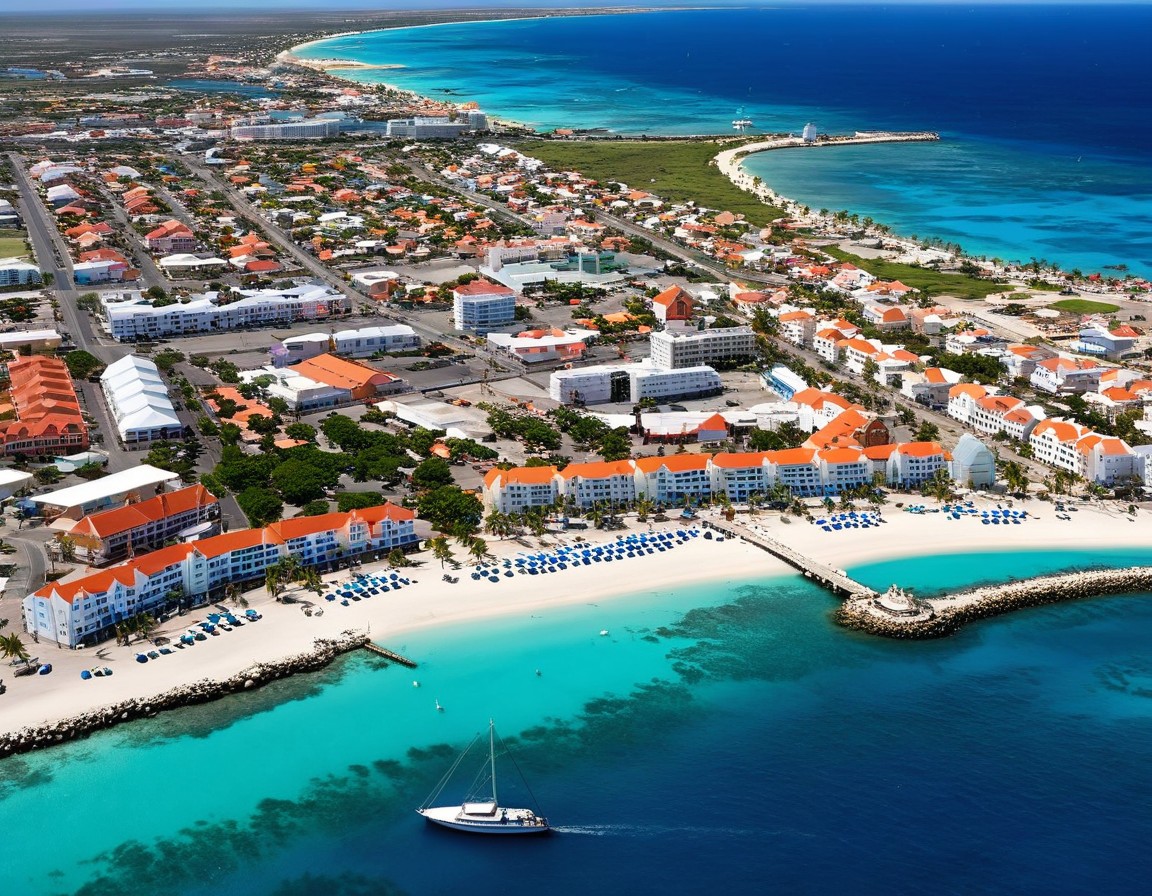
In the heart of the southern Caribbean, where azure waters meet golden shores, lies the enchanting island of Aruba. This Dutch Caribbean gem, barely 20 miles long and 6 miles wide, punches far above its weight in terms of cultural richness, historical significance, and natural splendour. As winter’s chill grips much of the Northern Hemisphere, Aruba emerges as an idyllic December refuge, offering a unique blend of sun-soaked beaches, fascinating landmarks, and a commitment to sustainable tourism that sets it apart in the region.
Geographical and Cultural Significance
Situated just 15 miles off the coast of Venezuela, Aruba is the westernmost island of the ABC islands (Aruba, Bonaire, and Curaçao) in the Leeward Antilles. Its strategic location has shaped its history and culture, creating a melting pot of influences from Indigenous Arawak, Spanish, Dutch, and African heritage.
Aruba’s geological formation is equally intriguing. Unlike many of its volcanic Caribbean neighbours, Aruba is largely flat and arid, characterised by its distinctive divi-divi trees, shaped by the constant trade winds, and its rugged northeastern coastline dotted with limestone cliffs and hidden coves.
Historic Landmarks of Oranjestad
Oranjestad, Aruba’s capital and largest city, serves as a vibrant testament to the island’s rich history. Named after the Dutch Royal House of Orange, this charming city seamlessly blends colonial architecture with modern amenities.
Fort Zoutman and Willem III Tower
At the heart of Oranjestad stands Fort Zoutman, Aruba’s oldest building, constructed in 1798 to defend the island against pirates and other enemies. Adjacent to the fort is the Willem III Tower, added in 1868 as a lighthouse and public clock tower. Today, this complex houses the Historical Museum of Aruba, offering visitors a deep dive into the island’s past through artefacts, documents, and interactive exhibits.
Archaeological Museum of Aruba
For those seeking to unravel Aruba’s pre-colonial history, the Archaeological Museum is an essential stop. Housed in a beautifully restored colonial-era home, the museum showcases over 10,000 artefacts dating back to 2500 BCE, providing crucial insights into the lives of the island’s earliest inhabitants.
Ecury Complex
This restored 19th-century merchant’s house now serves as a cultural center, housing the National Library and offering a glimpse into Aruba’s colonial past. The complex’s architecture and exhibits provide a vivid illustration of the island’s evolution from a Dutch colonial outpost to a modern Caribbean nation.
Natural Wonders of Aruba
While Oranjestad offers a window into Aruba’s human history, the island’s natural landscapes provide equally compelling narratives of geological and ecological significance.
Arikok National Park
Covering nearly 20% of the island, Arikok National Park is a testament to Aruba’s commitment to environmental conservation. This rugged wilderness encompasses a diverse array of ecosystems, from desert-like hills studded with cacti to hidden beaches and remarkable geological formations.
One of the park’s most striking features is the Natural Pool, or “Conchi,” a secluded, naturally-formed swimming hole on the northeast coast. Surrounded by volcanic rock formations, it offers a unique swimming experience for adventurous travellers.
Quadiriki Caves
Located within Arikok National Park, the Quadiriki Caves offer a fascinating glimpse into Aruba’s geological and cultural past. These limestone caves feature ancient Arawak petroglyphs, providing tangible links to the island’s indigenous history.
California Lighthouse
Perched on Aruba’s northwestern tip, the California Lighthouse offers panoramic views of the island’s contrasting landscapes. Named after a steamship that sank nearby in 1891, the lighthouse has become an iconic symbol of Aruba and a popular spot for watching spectacular Caribbean sunsets.
Sustainable Tourism Initiatives
Aruba has emerged as a leader in sustainable tourism, recognising the delicate balance between economic development and environmental conservation. The island has set ambitious goals to transition to 100% renewable energy by 2030, a commitment that extends to its tourism sector.
One notable example is the Bucuti & Tara Beach Resort, the Caribbean’s first certified carbon-neutral hotel. This eco-resort implements a comprehensive sustainability program, including energy-efficient systems, water conservation measures, and a robust recycling program. Guests are encouraged to participate in local conservation efforts, such as beach clean-ups and sea turtle monitoring programs, fostering a sense of environmental stewardship among visitors.
The Aruba Aloe Factory and Museum offers another unique eco-friendly experience. As one of the world’s oldest aloe companies, it showcases the island’s long history with this versatile plant. Visitors can tour the facilities to learn about sustainable aloe cultivation and its various applications, from skincare to medicine.
Economic Impact and Environmental Balance
Tourism is the lifeblood of Aruba’s economy, accounting for approximately 87% of its GDP. In 2019, before the global pandemic, Aruba welcomed over 1.9 million visitors, an impressive number for an island with a population of just over 100,000.
However, this economic boon comes with environmental challenges. To address these, the Aruban government has implemented several initiatives:
- The “Aruba Certification Program” encourages businesses to adopt sustainable practices.
- A ban on single-use plastics and sunscreens containing oxybenzone (harmful to coral reefs) was enacted in 2020.
- The creation of marine protected areas to safeguard coastal ecosystems.
These efforts have not gone unnoticed. In 2015, Aruba received the National Geographic World Legacy Award for “Destination Leadership,” recognising its commitment to sustainable tourism practices.
December in Aruba: A Cultural and Climate Paradise
Visiting Aruba in December offers a unique blend of cultural experiences and ideal weather conditions. With average temperatures hovering around 82°F (28°C) and minimal rainfall, December provides perfect conditions for both beach activities and exploring the island’s attractions.
Culturally, December in Aruba is a festive time. The Sinterklaas celebration on December 5th, a Dutch tradition, sees parades and gift-giving across the island. Later in the month, the Dande Festival ushers in the New Year with groups of musicians traveling door-to-door, singing well-wishes for the coming year.
From an economic perspective, December marks the beginning of Aruba’s high season. While this means slightly higher prices, it also ensures that all attractions and services are fully operational, offering visitors the best possible experience.
Practical Tips for Eco-Conscious Travellers
- Choose eco-certified accommodations that prioritise sustainability.
- Participate in local conservation efforts, such as beach clean-ups.
- Use reef-safe sunscreen to protect Aruba’s marine ecosystems.
- Opt for electric or hybrid vehicle rentals, widely available on the island.
- Support local businesses and artisans to contribute directly to the local economy.
Conclusion
Aruba in December offers a compelling blend of historical richness, natural beauty, and sustainable tourism practices. From the colonial charm of Oranjestad to the rugged wilderness of Arikok National Park, the island provides diverse experiences for the discerning traveler. As we’ve explored, Aruba’s commitment to balancing tourism with environmental conservation sets a laudable example for other destinations.
For European travellers seeking a winter escape that combines cultural immersion, ecological awareness, and Caribbean allure, Aruba stands out as an exceptional choice. Its unique position as a nexus of Dutch, Caribbean, and South American influences creates a cultural tapestry unlike any other in the region.
As we look to the future of global tourism, destinations like Aruba – which prioritise sustainability without compromising on visitor experience – will likely play an increasingly important role. By choosing to visit Aruba, particularly during the culturally rich month of December, travellers not only treat themselves to a paradise getaway but also support a model of tourism that strives to preserve that paradise for generations to come.
